



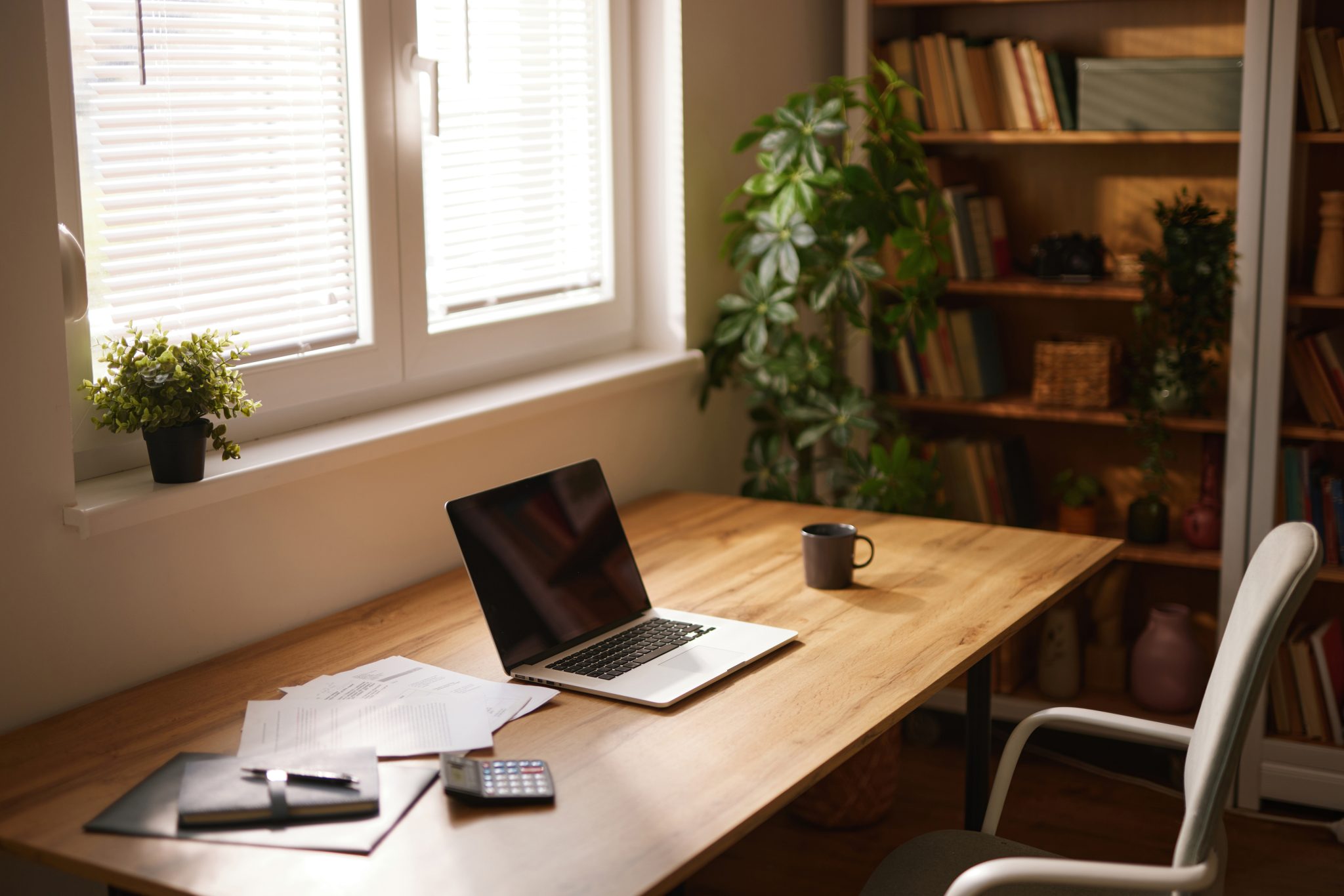
5 Design Tips for a More Productive Home Office
Working from home has become a permanent reality for millions of professionals, and the space you work in has a direct impact on how well you perform. A thoughtfully designed home office can sharpen your focus, support your health, and make the hours spent at your desk feel significantly less draining.
Trying to move your furniture around to play with placement and fit everything in the space is a common process when you’re focused on getting your nose to the grindstone as quickly as possible. But that is not the most effective method, and every home office setup could use a bit of organization to boost productivity and help people get more out of every work day.
5 Tips on Designing the Best Home Office
If you’re building a custom home at Shoal Creek or optimizing an existing luxury home, these five tips will help you create a workspace that actually works.
- How to Choose the Right Room
- Re-Consider Your Surroundings
- The Best Ways to Integrate Lighting
- Furniture is More than Function or Accents
- Structure Supports Organization and Focus
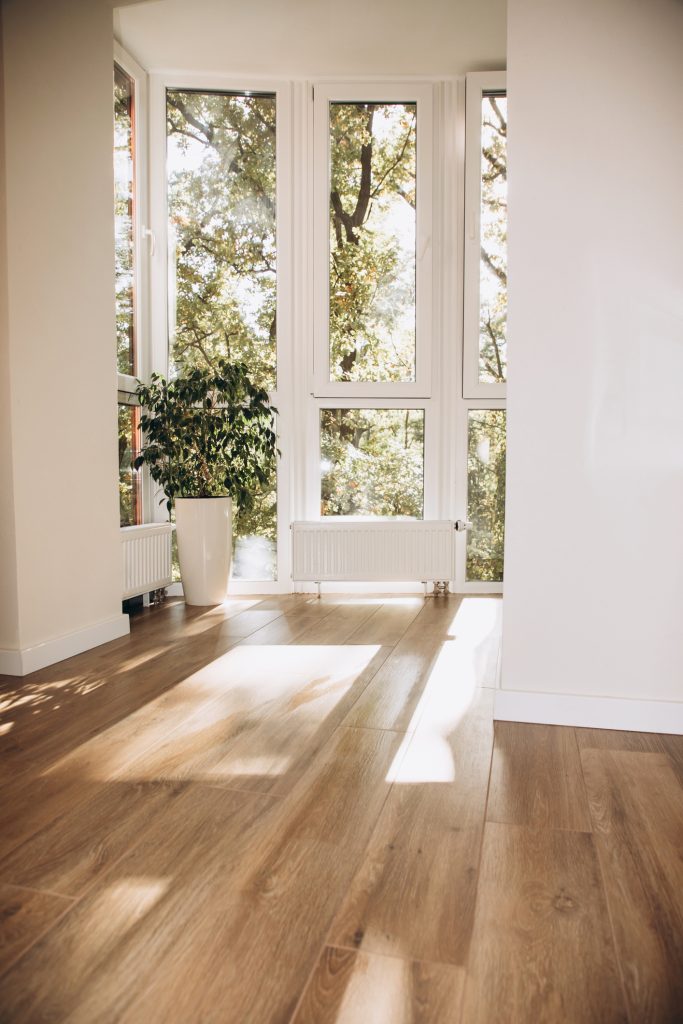
1. Choose the Right Room From the Start
Home office design begins with a single, critical decision: location. If you’re in the custom build phase, this is your greatest advantage. Think carefully about which direction the room faces, how foot traffic flows through your home, and how sound travels between spaces.
If you’re purchasing or have already purchased an existing luxury home, don’t default to a spare bedroom just because it’s available. Walk through your home at different times of day and pay attention to where the light falls, where it’s quietest, and where you feel most mentally clear. That room is your home office.
For custom home builds, consider:
- Positioning the office away from the primary living areas to reduce noise interruption
- Including a dedicated exterior entrance if clients ever visit
- Planning for conduit runs and built-in power access before walls are closed
2. Design for Awareness of Your Surroundings
We define our relationship to our surroundings through environmental psychology, because our environment affects our thoughts, feelings, and actions within a space. These principles range from simple logic (like moving a piece of furniture so that a door can open all the way) to intricate principles about light, color, art, and “energy”.
Setting Your Space Up for Success
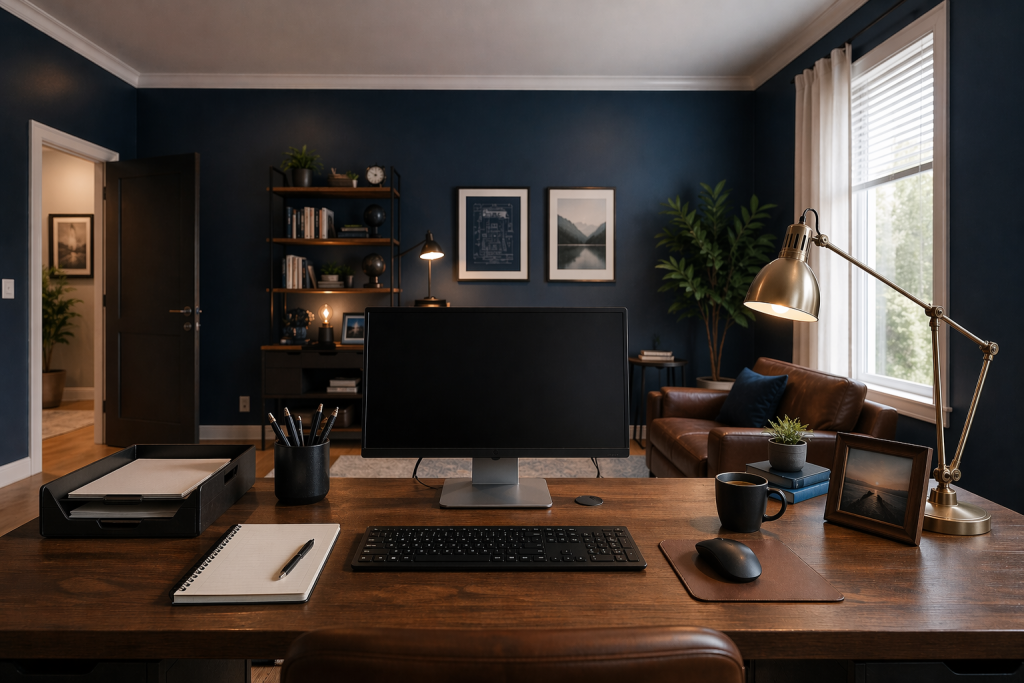
One of the more nuanced productivity tips that rarely gets enough attention is the idea of visual command. In feng shui, this is called the commanding position: your desk should be placed so that you can see the door to the room without sitting directly in line with it.
The reasoning for this is both psychological and practical. When you can see what’s entering your space, you feel more in control, less startled, and more settled in your concentration. And setting your desk out of line with the entrance means that you are paying less attention to your doorway and what might be happening outside of it, meaning you’re able to stay more focused on your work.
Sights, Sounds, and Other Stimuli
Beyond desk placement, think about what you’re looking at during the workday. A wall that’s completely blank can feel stagnant and stifling. Having a window within your line of sight is ideal, but it should typically be beside your desk, not in front of it. A piece of art or a plant can serve as a visual anchor that gives your eyes somewhere restful to land during mental pauses.
Sound also plays a role. If your home office sits near a busy area of the house, consider acoustic panels, a bookshelf along a shared wall, or even a white noise machine. These aren’t afterthoughts: they’re part of a workspace that supports deep focus.

A Practical Guide and Examples of Office Feng Shui
If you want a quick, visual introduction to how these feng shui concepts translate into a real workspace setup, this YouTube walkthrough on feng shui home office design is a good starting point for exploring what resonates with you.
3. Let Light Lead the Design
Few workspace optimization strategies deliver as much return as getting your lighting right. Natural light has been consistently linked to improved mood, better sleep, and higher alertness during work hours. If your home office has windows, design around them rather than against them.
Place your desk perpendicular to the primary window so light falls to the side rather than directly behind or in front of your screen. This positioning reduces eye strain and creates a more balanced visual environment.
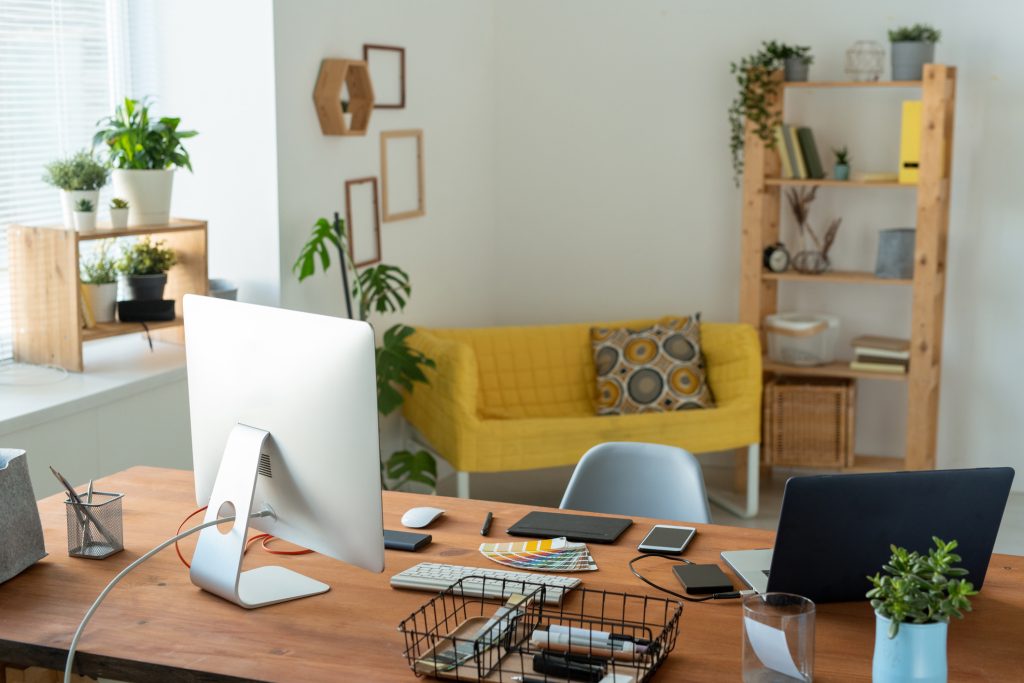
Optimizing Natural Light in Custom Home Builds
A north or east-facing room tends to receive softer, more consistent natural light throughout the day, which reduces glare on your screen and minimizes eye fatigue. South-facing rooms can get warm and bright in the afternoons, which is beautiful but can create contrast challenges on monitors. A good home designer can help you take these elements into consideration when you mention that they are factors that matter to you.
Artificial Lighting Design
For artificial lighting, layer your sources. An overhead fixture handles ambient light, a task lamp on your desk handles focused work, and a secondary lamp in the corner softens the contrast when working in the evenings.
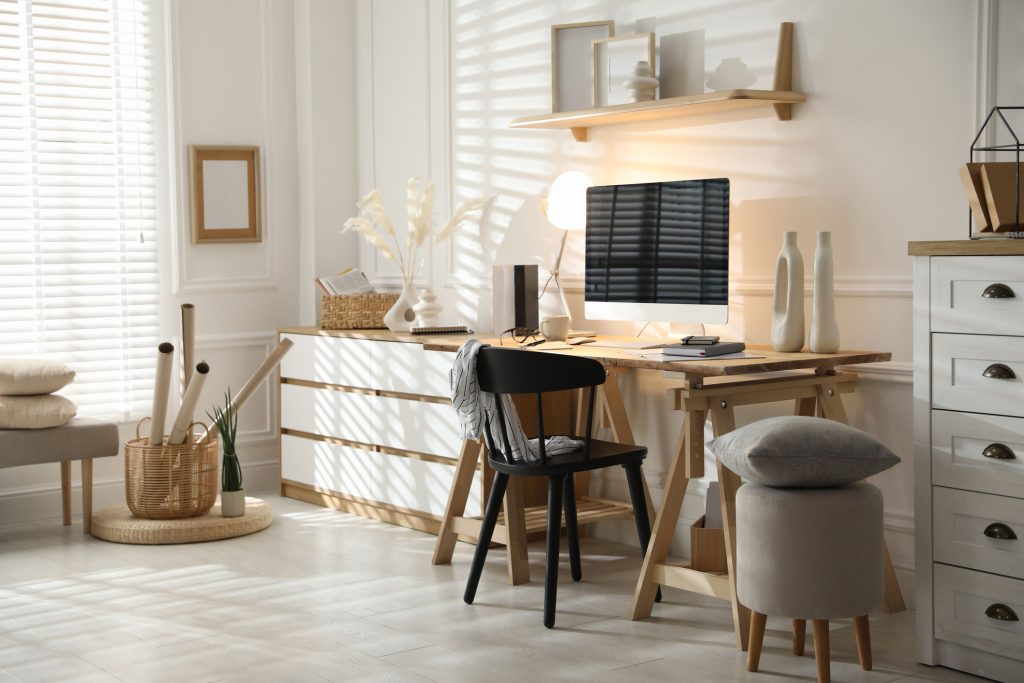
4. Furniture Tips for a More Functional Space
We all know someone who bought a beautiful or impressive piece of furniture that never seems to get used. For one reason or another, the aspirations they had when bringing the piece into their home didn’t pan out once it was actually in the space. It usually comes down to two things: placement and convenience (or usability).
Finding the Right Spot for Your Furniture
Furniture placement shapes how a space feels to work in, often in ways that are hard to pinpoint but easy to feel. Here are the key principles to keep in mind:
- Face the door, not the wall. Sitting with your back to the room’s entrance creates subconscious tension. Position your desk so you have a clear sightline to the door without sitting directly in front of it.
- Give your chair breathing room. Allow at least three feet behind your chair so you can move freely. Feeling physically cramped translates directly into mental restriction.
- Avoid pushing your desk against a wall. Facing a flat wall all day narrows your visual field and can quietly erode your sense of possibility and focus. A view into the room or toward a window is always preferable.
- Balance the room visually. Heavy furniture like bookshelves and storage units should be distributed along the walls rather than concentrated on one side. An unbalanced room creates an unbalanced mental state.
- Separate your zones intentionally. If your office includes a seating area for calls or informal conversations, keep it visually distinct from your primary desk area. Even a small area rug can signal to your brain that two different types of work happen in two different parts of the room.
Invest in Ergonomic Furniture That Fits You
Ergonomic furniture is one of the home office essentials that people most commonly underestimate until something starts to hurt. An imposing desk and a stylish chair are fine goals, but comfort and support have to come first.
Practical Tips for Comfortably Working from Home
Your chair should allow your feet to rest flat on the floor or a footrest, so your knees sit at a roughly 90-degree angle, and your lower back maintains its natural curve. Your monitor should be at eye level so your neck stays neutral. Your keyboard and mouse should sit at a height where your elbows stay close to your sides, and your wrists stay relaxed.
A few more ergonomic fundamentals:
- Monitor distance: roughly an arm’s length away
- Top of the screen: at or just below eye level
- Chair armrests: adjusted so shoulders stay relaxed, not raised
- Wrist position: neutral, not bent up or down while typing
5. Reduce Clutter With Intentional Storage
Clutter is a productivity tax. Every item on your desk that has nothing to do with your current task is competing for your attention, even if you don’t consciously notice it. This is another area where feng shui intersects with practical design: a clear, organized surface is associated with clearer thinking and reduced mental friction.
Focus on the Basics
Keep your desk surface to the essentials only: your monitor, your primary input devices, a notepad, and perhaps a single personal item that brings you some satisfaction. Everything else earns a drawer or a shelf.
Pre-Build Storage Design
During a custom build, plan your storage before you finalize your layout. Built-in shelving, cabinetry with closed doors, and dedicated cable management can all be incorporated before a single piece of furniture is moved in.
Storage Design for Existing Spaces
If you’re optimizing an existing space, consider a mix of open shelving for frequently referenced items and closed storage for everything else.
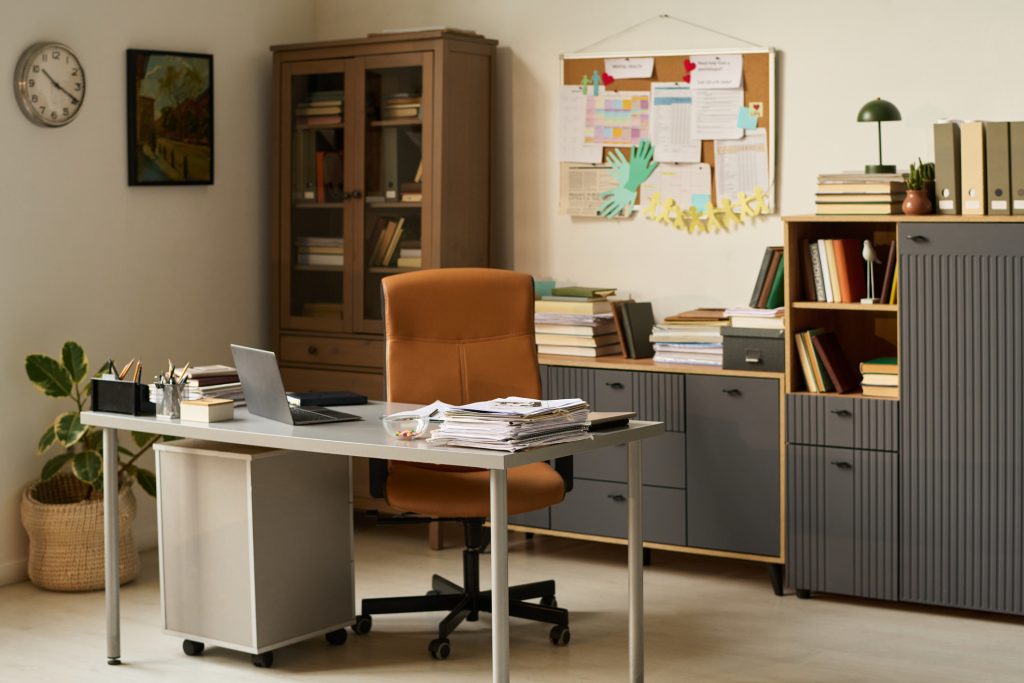
Group items by how often you reach for them and let that frequency dictate where they live in the room. Daily-use items belong within arm’s reach, weekly items can live in a drawer or on a nearby shelf, and everything else should be stored out of sight entirely.
Building Your Best Office at Shoal Creek
In a well-crafted home, every room has a purpose, and a dedicated workspace can become one of the most valuable. Clean layouts, comfortable seating, and intentional lighting all come together to support focus and creativity.
Luxury homes with flexible layouts make it easier to carve out a space that fits your routine. Extra bedrooms, lofts, or quiet corners can transform into productive environments with the right approach to home office design.
Shoal Creek offers the opportunity to do exactly that, whether you’re building from the ground up or stepping into a luxury custom home that gives you the bones to create something that genuinely improves your daily life.
Find Your Place to Focus
Explore available homesites and discover how a well-designed home can support both work and relaxation. Walk the property, experience the surroundings, and start planning a space that fits your lifestyle. Call (205) 991-4653 to learn more and schedule a visit today.
Interested in Living at Shoal Creek?
Request an appointment to visit our luxury community today.